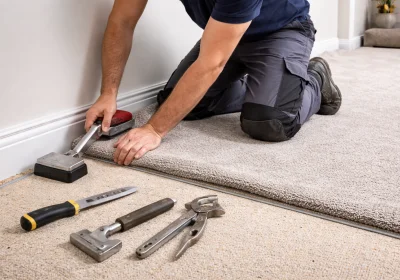
Wet and muddy weather can be one of the toughest challenges for carpeted homes. As rainfall increases during autumn and winter, carpets are exposed to more moisture, dirt and grit than at any other time of year. This is most noticeable in hallways, stairs and living rooms where foot traffic is highest.
Without the right care, carpets can quickly start to look worn, feel damp underfoot or develop lingering smells. Understanding why wet weather affects carpets and taking simple preventative steps can help maintain their appearance and extend their lifespan.
Why Wet Weather Causes More Carpet Damage
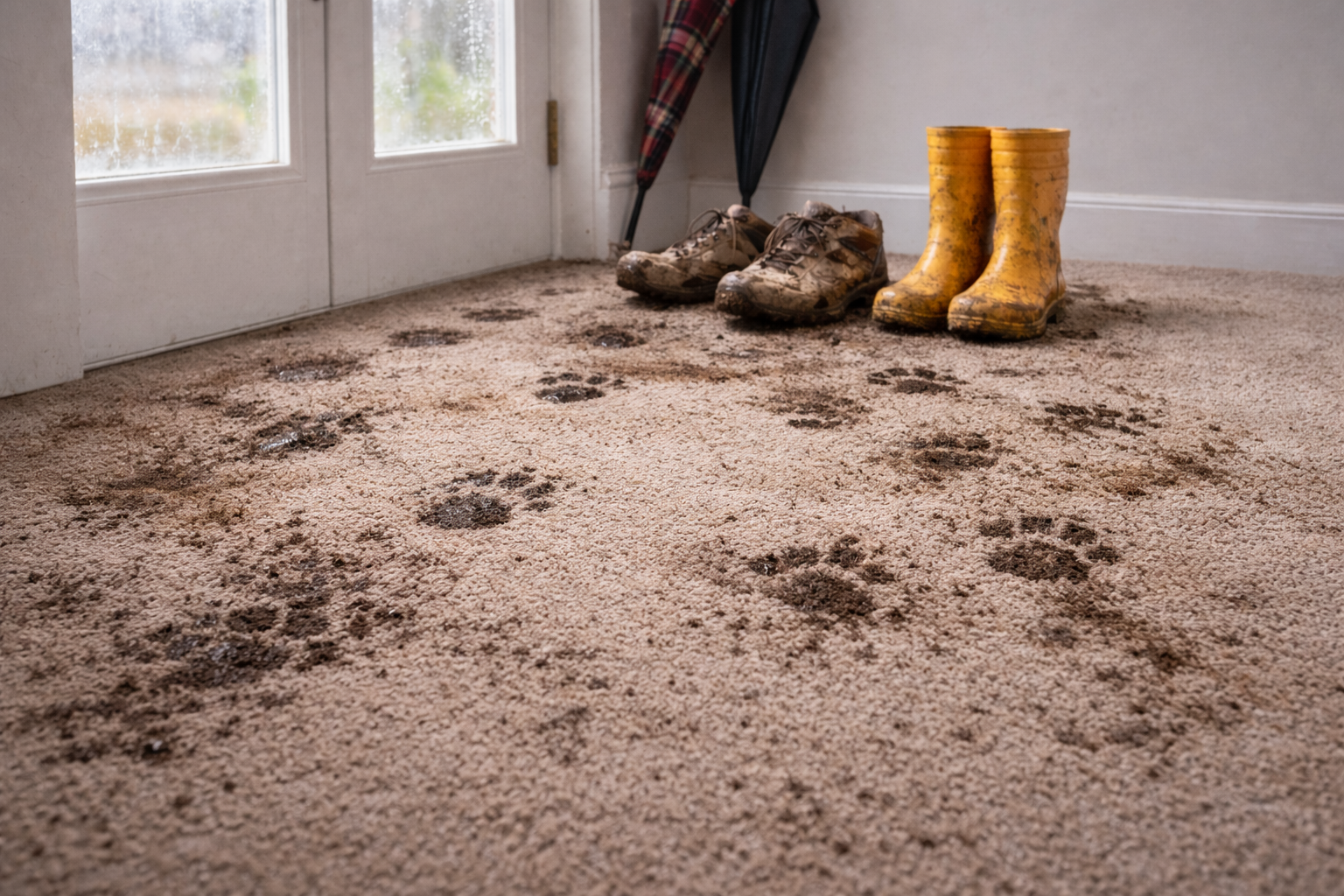
Every time someone enters the home on a rainy day, small amounts of water and dirt are carried inside. Over time, this builds up within carpet fibres and leads to visible wear. Moisture softens fibres, making them easier to flatten, while grit acts as an abrasive as people walk across the surface.
This often results in darker patches near entrances, flattened stair carpets and a general dull appearance that regular vacuuming struggles to correct. Damp conditions can also contribute to unpleasant smells if carpets are not allowed to dry properly.
The damage usually happens gradually, which is why preventing problems early is far more effective than trying to fix them later.
Creating a Barrier at Your Doorways
One of the most effective ways to protect your carpet is to reduce how much dirt and moisture enters the home. Doorways act as the main entry point for wet shoes and muddy footprints, so small changes here can significantly reduce wear.
Using a combination of outdoor and indoor door mats helps trap moisture before it reaches carpeted areas. Encouraging people to wipe their feet thoroughly also makes a noticeable difference. During particularly wet periods, some households find it helpful to remove shoes at the door.
These habits are especially important in homes with light coloured carpets or children who are frequently going in and out during bad weather.
Adjusting Your Cleaning Routine for the Season
During drier months, a weekly vacuum is often enough. In wetter seasons, carpets collect dirt much faster and benefit from more frequent cleaning. Regular vacuuming prevents grit from becoming embedded deep within the fibres, where it causes long term damage.
High traffic areas such as hallways and stairs should be prioritised. Slower vacuum passes help lift dirt more effectively than rushing and using the correct height setting helps protect the carpet pile. Focusing cleaning efforts on busy areas often delivers better results than deep cleaning the whole house too often.
Handling Mud, Water and Stains the Right Way
Muddy footprints and water marks are common during wet weather, but how they are treated makes a big difference. Mud should always be allowed to dry fully before cleaning, as trying to remove it while wet can spread the stain further into the carpet.
Once dry, vacuuming removes loose dirt before any moisture is introduced. For damp patches or water marks, blotting with a clean cloth is more effective than rubbing. Using too much water can lead to odours and may affect the carpet backing, so gentle cleaning is always best.
Helping Carpets Dry Properly
Moisture trapped in carpet fibres is one of the main causes of musty smells. Good airflow helps carpets dry faster and stay fresher for longer.
Opening windows when possible, using extractor fans or running a dehumidifier in problem areas can all help. If part of the carpet becomes noticeably wet, keeping foot traffic off until it is fully dry prevents fibres from flattening and stops dirt being pushed deeper into the pile.
Drying is just as important as cleaning when it comes to long term carpet care.
Paying Attention to High Traffic Areas
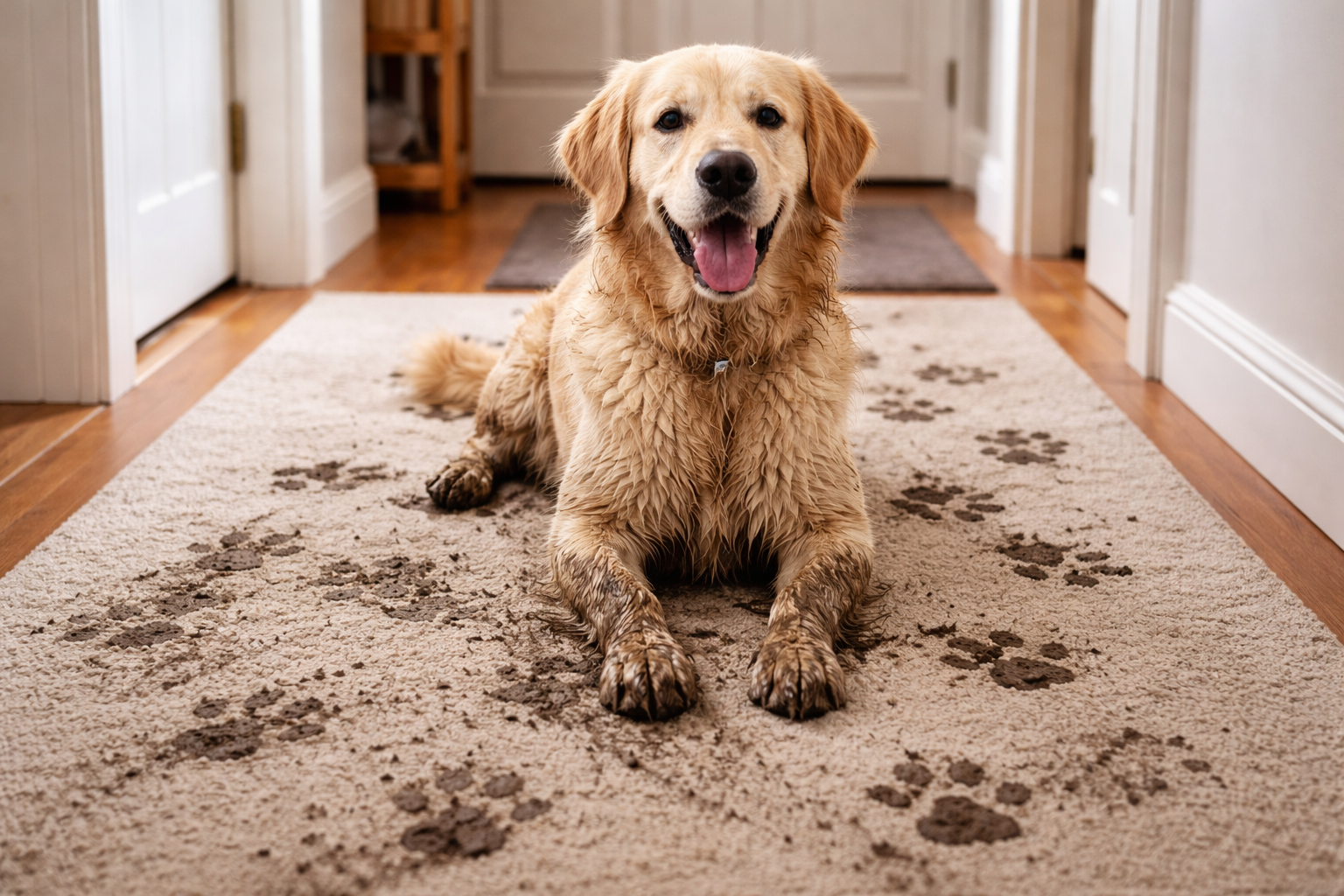
Some areas of the home experience far more wear than others, particularly during wet weather. Hallways, stairs and areas just inside external doors are usually the first places to show signs of damage.
Extra protection in these zones can extend the life of your carpet overall. Runners or small rugs can reduce direct wear while still fitting in with the look of the room. Regular maintenance focused on these areas often prevents the need for early carpet replacement.